





If the first half of 2026 has made anything clear, it is that Africa’s experience economy has moved past the foundational question of whether a viable market exists.
The data is already in: a massive market absolutely exists. People are traveling across borders for culture, audiences are spending heavily on live experiences, and global brands are investing in platforms that give them proximity to local creative communities.
Even major cities are beginning to recognize the immense economic value of attracting global audiences around key cultural moments.
So what happens when consumer demand outpaces the infrastructure built to serve it?
“This is exactly why Africa’s experience economy is entering a strict ‘execution era.’ For years, discussions around the continent’s creative sector focused purely on raw potential,” says Tiwa Medubi, Managing Director at Livespot360.
“Could African entertainment attract global audiences? Could our festivals become legitimate drivers of tourism? Could the continent develop premium experiences capable of competing for international attention? We have spent enough time answering those questions with a resounding yes.”
According to Medubi, this evidence is highly visible in the rapidly growing scale and sophistication of the current market.
“What used to be ‘Detty December’ has evolved into a massive, multi-industry cultural season that draws diaspora audiences, brands, and creators into major hubs like Lagos. New platforms are emerging around music, food, fashion, nightlife, art, and hospitality,” she notes.
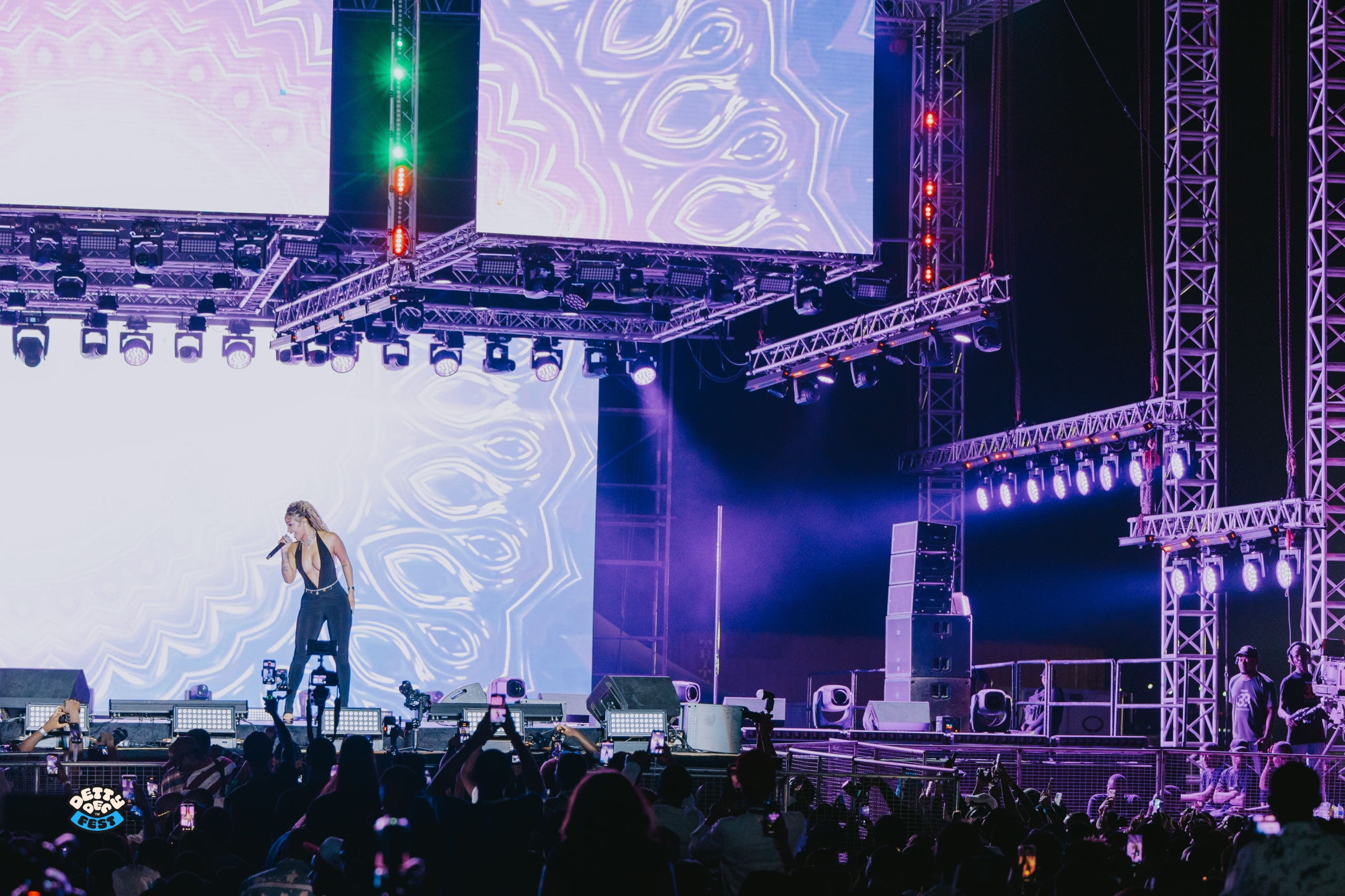
“For example, Detty December Fest itself is being designed as a massive 13-day festival experience in Lagos, packing concerts, cultural programming, and family hospitality into a single window from December 18–30.”
Entertainment Week Africa (EWA) and other foundational platforms are building a permanent layer of operational infrastructure around the wider creative economy. EWA brings creators, executives, investors, and brands together across seven distinct industry tracks to embed concrete content markets, showcases, and deal-making spaces into the fabric of the industry.
These developments point to a massive shift: the core opportunity has moved from proving consumer demand to actively building operational capacity.
“One of the clearest lessons from the first half of this year is that audience appetite is past the point of being the industry’s biggest hurdle. The appetite is fully here; the true opportunity lies in serving that audience better. As African experiences attract larger and more diverse global crowds, the standard for operational delivery rises with them,” says Darey Art Alade, Co-founder and Group Creative Officer at Livespot360.
A truly successful event today does not just rely on a great headliner. It hinges on the execution of hundreds of invisible, moving parts: venue infrastructure, sound production, digital ticketing, regional transport, premium hospitality, security, staffing, and proactive customer communication. Audiences experience all of these moving parts as a single entity: the experience.
According to Darey, this reality fundamentally changes the economics of the entertainment industry. A compelling creative idea can capture temporary attention, and a well-produced event can build consumer trust. However, only a reliable, seamless operating system can turn that trust into repeat participation, stronger brand partnerships, and sustainable commercial value.
In the modern experience economy, the product goes beyond what happens on the physical stage; it includes absolutely everything around it. It encompasses how easily a fan discovers an event, how smoothly they purchase a ticket, what they encounter when they arrive at the venue, and how seamlessly partner brands participate without disrupting the fan’s enjoyment. The creative idea is just the starting line; flawless execution determines how far that idea can actually travel.
As the cultural market grows more crowded, execution becomes the clear standard for success across the board. More events are entering the space, more brands want cultural relevance, and more cities want the economic benefits associated with festivals and major cultural moments. Audiences have greater choices and, consequently, much higher expectations.
This shift is highly healthy for the industry because intense growth forces the entire market to mature. However, it also exposes our deepest structural gaps. Physical infrastructure remains a massive bottleneck, alongside a shortage of skilled production teams, reliable supply chains, adequate venue capacities, robust audience data analytics, and strict safety standards. These backend operations are far less visible than a headline artist, but they dictate whether an experience can transition from a lucky, successful moment into a sustainable, long-term platform.
There is a clear need to combine bold creative thinking with rigid operational discipline. Industry operators must understand that backend production is a core part of the creative product, that technology directly dictates the audience experience, and that commercial planning belongs at the very beginning of the creative pipeline, not at the tail end. Ideas create demand, but execution creates confidence.
The Experience Economy is Bigger Than the Event
There is another critical shift worth paying close attention to: the economic value of a major experience extends far beyond the perimeter of the venue gates. A major cultural festival dynamically activates local hotels, restaurants, ride-sharing networks, fashion houses, media platforms, and a massive web of independent local suppliers.
This is exactly why the experience economy is so vital to Africa’s broader economic development. When international tourists travel for an experience, their purchasing power travels directly into the local ecosystem. When an African creative property attracts a global audience, the monetization opportunity expands far past ticket sales into long-term tourism, corporate sponsorship, intellectual property licensing, and regional brand equity.
Strategic operators in Africa must build around this ecosystem deliberately. This means thinking about the city, the local community, and the broader commercial landscape alongside the logistics of the event itself.
Scale Will Come From Repeatability
The next stage of growth requires a complete rethink of what “scale” actually means in the creative sector. True scale is not simply squeezing more people through a physical gate. Instead, it means building experiences that can be systematically repeated, improved, and expanded without losing the core qualities that made audiences care in the first place.
Achieving this requires creating robust systems that allow a single production to operate seamlessly across multiple venues or cities. It means using technology to extend the audience experience long before and after the physical gates close, developing deep audience data to predict consumer behavior, and building corporate partnerships that can grow alongside the platform.
This is where the convergence between physical experiences, digital platforms, content, and community becomes indispensable. Under this model, a festival transforms into a global content engine, a summit becomes a transaction-driven deal room, and a live event evolves into valuable, defensible intellectual property. This is a fundamentally different, more mature way of thinking about growth.
Strengthening the Infrastructure for Ideas
There is a second side to this conversation that deserves equal attention. If we want the experience economy to keep growing, the industry must strengthen the underlying ecosystem that produces the ideas, talent, and businesses behind these live moments. This means building predictable pathways for creators to develop their portfolios, securing institutional access to capital, and establishing stronger professional networks across music, film, fashion, technology, art, and live production.
This is precisely why permanent industry platforms like Entertainment Week Africa (EWA) are so vital. EWA serves as a continuous infrastructure platform that provides creators with the tools, access, and standardized systems they need to scale their operations. EWA bridges both sides of the equation by embedding dedicated content markets and transaction-focused deal rooms directly into the creative ecosystem. Incredible live experiences must give audiences a reason to participate, but the business infrastructure must equally give creators the tools to build sustainable enterprises.
The opportunity ahead is massive, but so is the responsibility. Africa has already demonstrated that its culture can command global attention. The next true measure of progress is how effectively we convert that temporary attention into durable economic value.
Accomplishing this requires deep investment in infrastructure right alongside raw creativity. It requires corporate partnerships built around shared, measurable value rather than surface-level sponsorships. The industry must also improve how it measures success, evaluating events through data points like audience retention, consumer behavior, and long-term brand equity alongside simple gate attendance.
Most importantly, this evolution requires patience. Creative economies are built over time, and the strongest cultural platforms are rarely created by a single successful event. They are built through repetition, operational learning, continuous investment, and the ability to improve every single time an audience shows up.
The crowds are already proven to come; now the focus turns to building experiences worth returning for. Global brands are proven to want to participate in our culture; now the focus turns to building platforms that create measurable value for them. The execution era is officially here, and mastering operational discipline today will help define the African market for decades to come.